Remote access without a static IP
Reach a self-hosted stack from anywhere using Cloudflare Tunnels. No static IP, no exposed ports.
Read this guide →
0

Cloud & Infrastructure / Deep Dive
Self-hosted business tools run on a private VPS you control: your CRM, ERP, file drive, password vault and team chat, all on your own domain. You keep the data and drop the per-seat fees. We deploy, secure, back up and update the stack for a flat monthly fee.
Self-hosted business tools run on infrastructure you control. That is usually a VPS, a private cloud instance or a small on-premise server. Instead of paying per seat to a SaaS vendor, you deploy open-source apps onto one host and reach them through your own domain.
The coverage matches a stack of cloud subscriptions. Three things change. The data stays on infrastructure you administer. The cost stops growing with headcount. The integrations between tools are no longer locked behind paywalls.
This guide is part of our managed cloud hosting service. It explains what you deploy, what we handle and when self-hosting makes sense.
Replaced with a flat VPS bill
100% on your infrastructure
5 to 15 is typical
A typical stack covers the same ground as a SaaS bundle, but as separate containers behind one reverse proxy. Each app gets its own subdomain and runs in isolation. Backups and user identity are shared, through a self-hosted SSO or a directory.
Most teams do not want to learn Docker, reverse proxies or backup rotation just to escape a SaaS bill. Deployment, hardening, monitoring and updates run as a managed service. You keep the ownership and the data. We keep the host healthy.

The decision to self-host rarely starts with ideology. It starts with a renewal quote. A CRM doubled its per-seat price. A storage tier forced an upgrade. An ERP add-on locked a feature behind a higher plan.
At that point a self-hosted equivalent on a VPS looks serious. The software is not free, because someone has to run it. But the cost stops scaling with headcount, integrations stop being a paid add-on and the data stops living where a vendor can rate-limit it.
The other common trigger is compliance. Clients in legal, healthcare, finance and government work increasingly want their data on identifiable infrastructure, with named operators in a known jurisdiction. A VPS in a region you choose, run by a team you can name, meets that requirement. A multi-tenant SaaS rarely does.
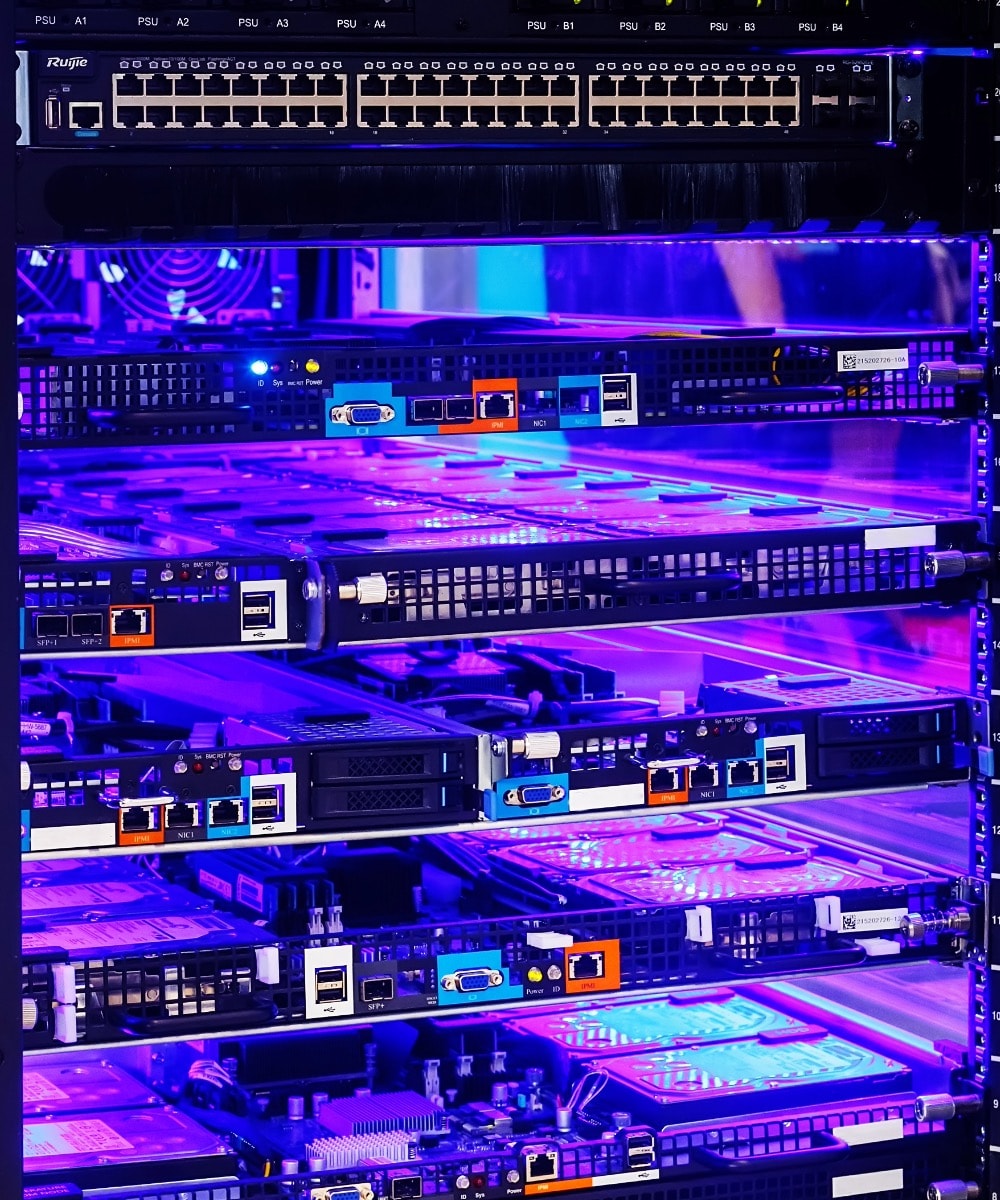

A small-business deployment usually lands on one mid-size VPS with fast NVMe storage, typically 4 to 8 vCPUs and 8 to 32 GB of RAM. It runs Docker with a reverse proxy in front. Five to ten apps share the host: CRM, ERP, file drive, password vault, knowledge base, team chat, helpdesk and analytics.
Each app has its own subdomain and TLS certificate. A second, smaller VPS, or a NAS in another building, holds nightly encrypted backups. Restores are tested on a schedule, not assumed to work. Our disaster recovery guide explains how.
The monthly bill is the VPS plus our management fee. That management is the part most teams want a partner for, and it is what this service covers.
Tell us which apps you want self-hosted and how many seats. We will scope the VPS, the deployment plan and the monthly run cost.
Scope my self-hosted stackTypical migration time
Apps per host
Backup window
FAQ
What teams ask before they move off SaaS.
Below about five users the saving is small, because the VPS plus management can match the subscriptions. The gap widens as the team grows. The VPS bill stays flat while per-seat fees rise with every hire. We compare your real renewal quotes with the self-hosted cost before you commit.
You do. The VPS is registered in your account or your company name, the domain is yours and the database backups go to storage you control. MrZaKaRiA operates the host under a service agreement. Ownership of the infrastructure and the data never transfers.
Every deployment has a documented recovery path: nightly snapshots, off-site backups in a different region and a tested restore procedure. For business-critical workloads we can add a warm standby host, so a failed primary is replaced in minutes rather than hours.
Yes. Self-hosted does not mean isolated. The apps still send and receive email, work with payment providers, sync with accounting platforms and call AI APIs. The difference is that the system of record, whether CRM, ERP or file store, lives on infrastructure you control.
It is often easier to bring into line, because data location, access logs, encryption and retention are under your control. We configure region, encryption at rest, audit logging and data-processing documentation for the rule that applies to you. Compliance also depends on your wider process, so we scope it with you.
Most SaaS tools offer an export. The usual pattern has four steps: export from the vendor, convert to the self-hosted app's import format, validate on a staging environment, then cut over with a short read-only window. We can run the migration end to end or coach your team through it.
Send us the list of tools you want self-hosted and the team size. We will come back with a VPS sizing, a deployment timeline and a flat monthly run-cost figure.
Plan a self-hosted deploymentEach guide stands alone, but the full picture is built from all four. Pair this with the related deep dives or jump back to the Cloud, Hosting & Infrastructure pillar.
Reach a self-hosted stack from anywhere using Cloudflare Tunnels. No static IP, no exposed ports.
Read this guide →3-2-1 backups, off-site replication and tested restores for every business-critical app on the host.
Read this guide →Register the domain that fronts the stack and set up inbox-grade email with SPF, DKIM and DMARC.
Read this guide →